


Rick Wakeman on Return To The Red Planet, David Bowie and the Art of Giving Music Space
David Bowie’s advice still plays a part in the way Rick Wakeman makes records. So does an appreciation of musicians who know when to leave a space, and a determination that an album should give listeners something to explore beyond the music itself.
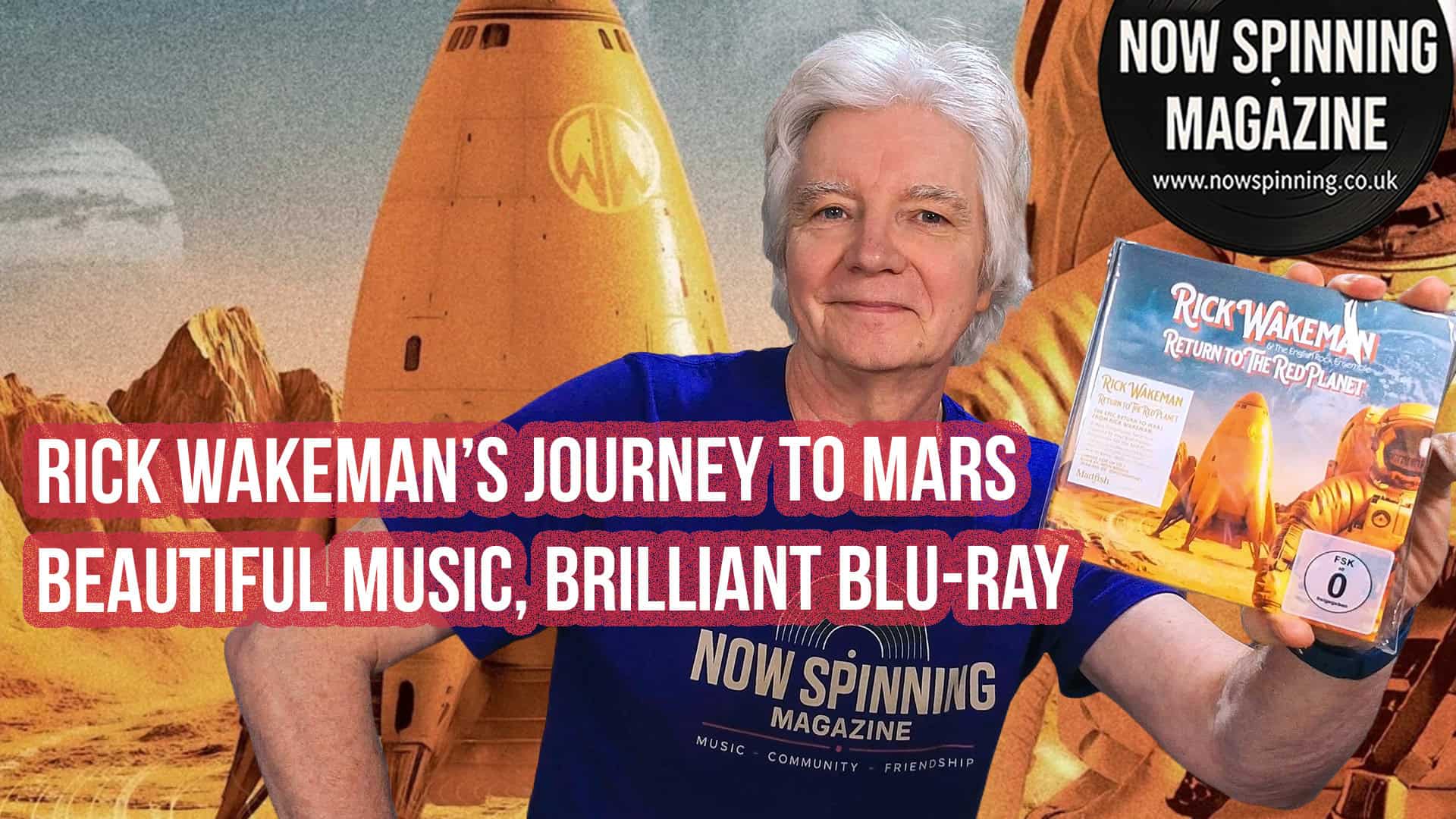
Those ideas came together throughout my conversation with Rick about Return To The Red Planet, his new album with the English Rock Ensemble which is available here
We talked about Mars, of course, but also the human interaction behind the recording: musicians exchanging ideas, a singer finding her place within an ambitious arrangement, and Rick deliberately staying away from the mixing process so he can hear the finished work with fresh ears.
A musical travel guide to Mars
Rick describes his first Mars album, 2020’s The Red Planet, in wonderfully accessible terms:
“I did The Red Planet very much as if a holiday brochure. If you could go to the Red Planet, what should you go and see?”
That approach gave him a way to turn unfamiliar landscapes into places listeners could imagine visiting. For the follow-up, further discoveries and images provided fresh inspiration, while encouragement from the team at Snapper helped set the return journey in motion.
Rick wanted the new recording to develop the idea. One important change was the addition of voices, used within the arrangements rather than simply turning the pieces into conventional songs. Another was the opportunity to create a personal tribute to David Bowie.
Rick’s enthusiasm for space runs through the conversation, alongside his humour. Mentioning that friends at NASA have sent his music into space, he suggests this might explain why aliens have yet to visit us.
Behind the joke is a lasting curiosity, encouraged by his connections with scientists, astronauts and the Starmus festival. Mars gives him an imaginative setting in which to keep asking questions—and writing music.
From photographs to piano and manuscript paper
When I asked whether a particular image had started the music flowing, Rick identified the Jezero Crater. Its scale, and the thought of water once flowing into it, encouraged him to imagine a very different landscape.
The process begins before his hands reach the keyboard:
“Most of the themes and the tunes and the ideas come into my head when I’m looking at pictures.”
He immerses himself in a project through photographs, reading and conversations. Then comes the piano and manuscript paper. As he puts it, he is “old school”.
Rick described several stages of development. At around 60 per cent of what he wants from a piece, he takes it into the studio with longtime collaborator Erik Jordan. There, the introduction of instrumental sounds helps develop the material further. Once the templates reach roughly 75 per cent, they go to the musicians.
Those figures describe his working process rather than a rigid formula. They also reveal how much room he deliberately leaves for other people.
The David Bowie principle
Rick’s approach to the band follows advice he associates with Bowie:
“If you choose great musicians, don’t tell them what to do. They know what to do.”
Understanding the intention behind the music is essential. Once the musicians can get inside that world, Rick trusts them to bring ideas he would not have supplied himself.
For Return To The Red Planet, that means Lee Pomeroy on bass, Dave Colquhoun on guitar and Adam Falkner on drums, with Mollie Marriott on vocals.
At Decoy Studios in Suffolk, he loved hearing the players discuss their parts and respond to one another. It reminded him of the early days of recording, and reinforced his desire to work with a band in that way again.
There was an important distinction when I asked whether any pieces had travelled far from his original vision. Rick said no. The musicians understood the direction, while contributing things he would never have thought to request.
He singled out the melodic quality of Dave’s guitar solos, an unexpected classical or almost flamenco guitar passage, Lee’s intricate basslines, and Adam’s ability to make complicated time signatures feel smooth.
The overall vision remained recognisable. The detail became richer through the people playing it.
Knowing when not to play
One of my favourite parts of the conversation concerned restraint. Dave Colquhoun’s contribution prompted a discussion about musicians who understand that a passage does not need to be filled with notes.
“It is an art form to know when not to play.”
Rick clearly values players who listen to the whole arrangement. That thinking also extends to his work with Erik Jordan, whose favourite word, he says, is “space”.
“If you want to hear something, give it some space.”
For music with this many instrumental colours, that is a revealing principle. Each contribution needs room to be heard, and the musicians need to recognise when somebody else is already saying what the passage requires.
Mollie Marriott and Bowie’s Vision
Rick repeatedly returned to a simple description of Mollie Marriott’s understanding of the music:
“She gets it.”
He had already worked with Mollie on a Journey To The Centre Of The Earth tour, where she also sang Yes material. That experience showed him a musical range extending beyond the blues and rock with which listeners might associate her.
Bowie’s Vision was the first piece he wrote for this project knowing she would sing on it. He could hear her voice within the composition before the recording took place.
He described demanding vocal writing, a substantial range and a singer able to read music and contribute her own suggestions. Her role involved understanding the shape of the work and helping it develop.
The piece itself is Rick’s thank-you to his late friend David Bowie, drawing on Bowie’s fascination with space and Mars. Rick said it took a long time before he was happy with it. Within the album’s exploration of landscapes and distant worlds, it brings a personal connection to someone whose imagination remains part of his creative life.
Why Rick stays away from the mixes
Bowie’s influence also extends to the point at which Rick steps back from a recording.
“I don’t go to mixes.”
He explained that Bowie had spoken about trusting the people responsible for a mix, allowing him to hear the result with something approaching the freshness of a first listen. Rick follows that principle with Erik Jordan.
After a deliberate break from the recordings, Jordan worked on the mixes. Rick retained the opportunity to request changes, but said that when he finally listened through the album, he was delighted.
He particularly praised the delicacy of the instrumental presentation and the treatment of Mollie’s voice and his keyboards. It is another example of the trust running through this project: Rick sets the direction, then allows his collaborators to do their work.
A reflective ending to the journey
Rick always knew that The Epochs Of Mars would close the album. He wanted its three-part journey to have the feeling of a film, but he also wanted the final moments to be reflective.
Rather than automatically reaching for a huge finish, he wrote towards an ending that would encourage listeners to sit back and imagine.
Our discussion touched on 2001: A Space Odyssey and the possibilities of pairing images with music that might not be the obvious choice. His intention was to leave room for contemplation at the end of an eventful musical journey.
Why the physical album matters
For the Now Spinning community, Rick’s comments about the physical editions will feel familiar.
“I’m old school. I’m tactile.”
He wants to hold a CD or record, read about the music, discover who played on it and understand what the composer and musicians had in mind. That information is part of his experience as a listener.
The photography and explanatory material are particularly valuable here. A title such as Witch Hazel Hill might sound like an imaginary place—or, as Rick observed, somewhere around the corner in Suffolk. Learning that it is a location on Mars adds another dimension to the music.
The visual presentation also contains details to discover. Rick recalled the small image of Bowie in the artwork for the original The Red Planet, and the pleasure of listeners noticing it.
His view of the complete experience was straightforward:
“Music should be packaged nicely for people.”
Return To The Red Planet is available on CD and vinyl, with CD/Blu-ray editions offering high-resolution stereo, 5.1 surround and Dolby Atmos mixes. Selected editions include the pop-up Martian landscape packaging.
Beyond Mars and a dream live setting
Rick is already considering where the story might go next. He suggested a possible third chapter, perhaps looking beyond Mars and completing a trilogy.
He spoke positively about reviews and advance orders, while making clear that a further recording would depend on how things develop. Beyond Mars is an idea he discussed, rather than an announced release with a confirmed date.
There is also a striking possibility for presenting the music live. Rick recalled performing at Starmus in Armenia, where a stage had been transformed into a recreation of the Martian surface. He would love to return with the band if that setting could be recreated, potentially filming or streaming the performance.
“That’s the closest thing I’ll ever get to playing on Mars.”
It was a lovely image on which to finish. What stayed with me just as much was the enthusiasm Rick expressed for his collaborators. For all the distant landscapes behind this album, much of its character comes from musicians listening to one another and giving each other room to contribute.
Search All our Podcast interviews here
Read and watch the unbocing review of Return to the Red Planet Here
Phil Aston | Now Spinning Magazine











A nice interview. And glad that you like the artwork. Best, M