
Slightly All the Time: The Recordings 1970–1974 is a substantial 17-disc collection: 14 CDs and three Blu-rays covering a fascinating period in the evolution of one of Britain’s most adventurous bands. At its heart are five albums, from Third to Seven, joined by BBC sessions, concert recordings, alternative studio material and a wealth of archive film.
It is the sort of set you can happily lose yourself in for weeks.
Finding my way into Soft Machine
When this music was first being made, I was listening to bands like Slade, T. Rex, Led Zeppelin and Deep Purple. If you had offered my younger self a Soft Machine album instead of Machine Head, I suspect it might have been a little too much for me at the time!
Even later in the 1970s, when I discovered the Mahavishnu Orchestra and Return to Forever, Soft Machine still seemed rather mysterious. As a guitarist and a fan of guitar-driven music, I remember wondering where the guitars were. Of course, as this set eventually reveals, Allan Holdsworth would become part of the story – and what a contribution he makes.
As the years have gone by, my musical tastes have travelled in all sorts of directions. I have been listening to more Soft Machine, and people have suggested that I spend time with albums such as Third and Fourth. Before this box arrived, my main reference was a basic original album collection: five little CDs with very little information to help tell the story.
This is a different experience. The albums are here, but so is the context: the broadcasts, performances, photographs and stories that help you understand the world in which this extraordinary music was created.
What’s inside the box?
The collection brings together Soft Machine’s five CBS albums from this period:
- Third (1970)
- Fourth (1971)
- Fifth (1972)
- Six (1973), including its live and studio recordings
- Seven (1973)
The albums are joined by surviving BBC radio sessions and concerts, a 1971 Radio Bremen concert, previously unreleased alternative recordings from the Fifth sessions, and the band’s 1974 Montreux Jazz Festival performance. The three Blu-rays gather concert footage, television appearances and documentary material from the period. genui{“citation”:{“ref”:”turn1view0″}}
The 14 CDs at a glance
| Disc | Contents |
|---|---|
| 1 | Third |
| 2 | London recordings, May 1970 |
| 3 | BBC radio sessions and concert recordings, 1970 |
| 4 | The Promenade Concert, Royal Albert Hall, 13 August 1970 |
| 5 | Fourth |
| 6 | BBC Radio 1 In Concert, 11 March 1971 |
| 7 | Radio Bremen concert, Germany, 23 March 1971 |
| 8 | BBC sessions from 1971 and 1972 |
| 9 | Fifth, plus the alternative Fifth sessions |
| 10 | BBC Radio 1 In Concert, 20 July 1972 |
| 11 | Six – live and studio material |
| 12 | Seven |
| 13 | BBC sessions from 1973 and 1974 |
| 14 | Montreux Jazz Festival, 4 July 1974 |
The three Blu-rays
- Disc 15: Paris in 1970; the Pop Deux film of the recording of Fourth; the BBC’s Anatomy of Pop; and a January 1971 Brussels performance.
- Disc 16: The 1971 Bremen Beat-Club session and Berlin Jazz Festival performance, French television material filmed in 1972, and the BBC’s Full House from 1973.
- Disc 17: Jazz Workshop in Hamburg and footage from the Bataclan, Paris, both from 1973, followed by the 1974 Montreux performance featuring Allan Holdsworth.
That is a remarkable amount of visual history for a band whose music could be challenging and exploratory, yet who were being filmed and broadcast across Europe. genui{“citation”:{“ref”:”turn1view0″}}
The Blu-rays: opening a window on the past
With a box set like this, I often head for the visual material first. Watching the musicians gives me a way into the music, but there is another reason too. Old footage can show you little glimpses of the world around the artists: the streets, the cars, the clothes and the atmosphere of the time.
The 1970 Paris performance is a wonderful place to start, and I thought the picture quality was stunning. Then there is the Pop Deux footage from Olympic Studios as the band prepare to record Fourth. I found this absolutely fascinating. You are watching the musicians at work, but you are also catching little moments outside the studio and getting a sense of the time in which it all happened.
The Brussels concert, the Bremen Beat-Club session and the Berlin performance are equally absorbing. The BBC’s Full House adds interviews alongside the music, while the Hamburg Jazz Workshop performance gives you another opportunity to watch the band stretch out.
For me, these films bring the box to life. You can hear the ideas developing on the CDs, then watch the musicians responding to one another on stage. I thought the quality of the music, sound and visuals was excellent overall. There are a few visible picture disturbances in the Montreux footage, but they certainly did not spoil my enjoyment.
Allan Holdsworth at Montreux
The 1974 Montreux Jazz Festival performance is available on both CD and Blu-ray, and it is one of the highlights of the whole set for me.
By this point Allan Holdsworth had joined the band, and watching him play is jaw-dropping. As a young guitarist I was listening to players like Ritchie Blackmore and Jimmy Page. When I first heard John McLaughlin with the Mahavishnu Orchestra, the sheer speed and the different musical language were almost frightening to me.
Holdsworth is extraordinary to watch: his fingers seem to move effortlessly across the neck while his expression remains almost completely calm. The freedom and fluidity of his playing are astonishing.
This concert comes before the release of Bundles, the album that would take the band further into the Holdsworth era. If I had seen this performance back then, I might have found my way into Soft Machine a little sooner. It is not that the whole story is about guitar, of course, but for someone who came to the band from the world of rock guitar, it is a thrilling point of connection.
The book and presentation
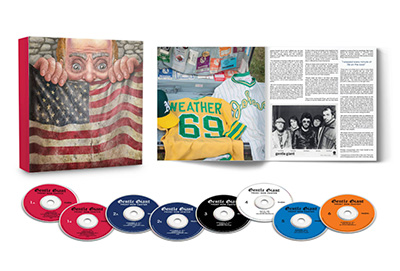
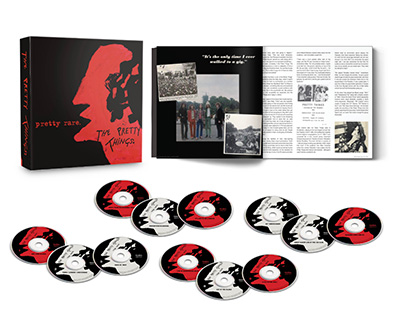
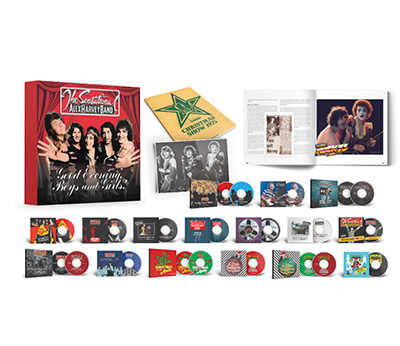
The discs come in fold-out wallets inside a sturdy large-format box. If you have seen the larger Camel, Tangerine Dream or Van der Graaf Generator sets, the style of presentation will feel familiar.
The hardback book is excellent. It is printed on substantial paper and brings together photographs, tape-box images, stills from the filmed performances and an extensive essay by Sid Smith, a writer whose work I have always admired.
I particularly like the way the album artwork is presented, with front covers, backs and gatefolds reproduced in the book. It gives you a real sense of the original albums and their design, even if you do not own the vinyl. In my case, Seven is the only one from this group that I have on vinyl, so it is lovely to spend time with the others in this form.
The photographs and the essay help chart the changes in the band through these years, and there is a useful visual guide to the albums and the period. This is the kind of book you can sit with while the music plays and keep returning to as you discover more.
Who is this set for?
If jazz and fusion are not for you, Soft Machine may remain a challenging listen. But if your tastes have expanded over the years, or if you have been curious about the band and never quite known where to start, this is a rewarding way to explore them.
For established fans, the attraction will depend on what you already own, but the alternative Fifth sessions and the range of archive performances give this set plenty to investigate. For someone like me, who had some of the core albums but very little of the surrounding material, having the music and film brought together with such care is fantastic.
What strikes me most is the breadth of music that was happening at the same time. While rock, glam, progressive music and soul were all taking their own paths, Soft Machine were making these adventurous records and finding audiences for them across Europe. Thanks to the recordings and footage gathered here, we can go back and experience some of that journey ourselves.
Slightly All the Time is a beautifully presented box set, full of remarkable music and performances. I am delighted to have spent time with it – and I will be going back to that Montreux concert again.
Have you picked up the set? Which Soft Machine album or line-up means the most to you? Let me know in the comments.
Release details
Artist: Soft Machine
Title: Slightly All the Time: The Recordings 1970–1974
Format: 17 discs – 14 CDs and three video Blu-rays
Catalogue number: 19802998812
Presentation: Large-format box with hardback book and essay by Sid Smith
ORDER THE SOFT MACHINE BOX SET HERE
Phil Aston | Now Spinning Magazine