
For me, The Roaring Silence is the high watermark of Manfred Mann’s Earth Band’s recorded output. When it came out in 1976, it seemed as though everyone I knew bought a copy. Fifty years later, it remains a fantastic album, and Creature Music has given it a physical presentation that reflects its importance.
I’m reviewing the double vinyl edition here. The pressings are superb, the packaging has been carefully thought through, and the accompanying book is a real pleasure to explore. My reservation concerns the bonus album and how closely its contents connect with the record we are celebrating.
A classic worth celebrating
Originally released on 27 August 1976, The Roaring Silence introduced the recording line-up featuring Chris Thompson and Dave Flett alongside Manfred Mann, Colin Pattenden and Chris Slade. It was a significant moment in the band’s development, bringing Thompson’s distinctive voice into the picture following Mick Rogers’ departure from the core line-up.[1]
“Blinded by the Light” is inevitably the best-known track. The Earth Band took Bruce Springsteen’s song and made it unmistakably their own, but this is an album with much more to offer than its hit single.
The original seven-track sequence also includes “Singing the Dolphin Through”, “Waiter, There’s a Yawn in My Ear”, “The Road to Babylon”, “This Side of Paradise”, “Starbird” and “Questions”. As the band’s own album history notes, “Starbird” draws on Stravinsky’s The Firebird, while “Questions” takes inspiration from Schubert’s Impromptu in G-flat major.[2]
There is plenty here to justify returning to the complete album, and that is what I want an anniversary edition to encourage us to do.
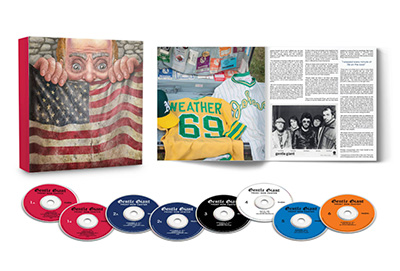
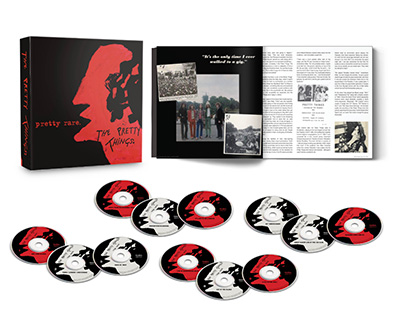
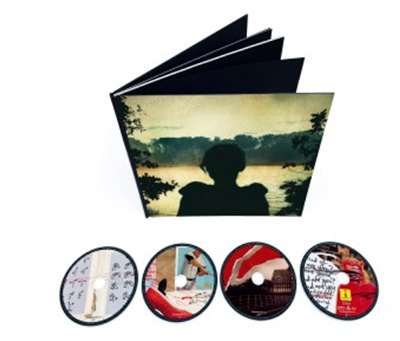
The first thing that struck me was how well this set has been assembled. Its substantial book-style presentation brings to mind some of the deluxe editions Rhino has produced for artists such as Yes, the Doors and Love. In some practical respects, I prefer what Creature Music has done here.
Both records sit in their own fold-out pockets, making them easy to remove. You are not trying to prise an LP out of a tight slot while worrying about damaging the sleeve or the book. Both also come in polylined inner sleeves.
These are details that matter when you actually live with a release and play it regularly. The card stock feels substantial, the design works, and the records are properly protected.
Most importantly, both pressings sound excellent. I cannot fault the pressing quality of the copies I have reviewed. The anniversary mastering is credited in the accompanying book to Pete Reynolds.
The book is one of this edition’s strongest attractions. The vinyl package contains 40 full-colour pages, and the space is put to excellent use.[3]
There are lyrics, photographs, memorabilia, original credits and an extensive account of the circumstances surrounding the album. The story takes in the period following Nightingales & Bombers, the arrival of Chris Thompson and Dave Flett, the recording at the Workhouse, and the success of “Blinded by the Light”.
There are contemporary interviews and press cuttings, alongside touring information and a new contribution from Manfred Mann. It gives you the sense that considerable effort has gone into finding the people and material needed to tell the story properly.
It reminds me of the care that goes into the Jethro Tull book sets: the appetite for detail, the historical context and the willingness to look beyond the obvious story. This is the sort of accompanying material that earns its place on the shelf. You can sit down with the record playing and spend time getting absorbed in it.
The bonus LP: where I have reservations
Manfred’s contribution to the book explains the difficulty facing this anniversary release. He says a studio fire in 1988 left no tapes from the era that could supply additional material. Instead, he assembled a selection illustrating different aspects of the Earth Band, combining new studio recordings with older and more recent live performances.
That is an understandable response to a frustrating situation. Nobody can include outtakes that no longer exist, and I appreciate his openness about the circumstances.
The vinyl bonus album includes the new recordings “Bird on the Wire” and “Stronger Than Me”, together with “Solos Compilation Part 1”. Its live selections include “Time Is Right” and “The Mighty Quinn” from the 1970s, plus 2025 performances of “Blinded by the Light”, “Davy’s on the Road Again” and “Martha’s Madman”.[3]
There is therefore a direct connection to the original album through the recent live version of “Blinded by the Light”. The older performances also offer a connection to the band’s history. Even so, taken as a whole, the extra LP feels more like a wider Earth Band companion album than a deeper exploration of The Roaring Silence itself.
When I buy an anniversary edition, I usually hope the additional material will take me further into the record’s particular world: its writing, recording, original performances or subsequent interpretation. New recordings are welcome, but I do find myself questioning their place within this specific celebration.
“The Mighty Quinn” is a great song with an important place in Manfred Mann’s career. My reservation is about how much it adds to our understanding of The Roaring Silence.
One possibility might have been a contemporary performance of the complete album. Hearing how the current band interprets those songs could have made an interesting companion to the original recording. Then again, I recognise that albums are not necessarily written as complete concert programmes. Some songs are intended to live within the album, and asking a band to recreate everything onstage is not always a straightforward solution.
More live interpretations of material from The Roaring Silence would, for me, have given the bonus disc a clearer focus.
As a physical release, this is beautifully done. The book, the interviews, the quality of the materials and the practical design all demonstrate care. The pressings sound superb, and the original album remains a joy to revisit.
The bonus LP is the element that leaves me less convinced. I understand the reason for its approach, and some fans will welcome the mixture of new recordings and live material. Personally, I would have preferred a stronger connection throughout to The Roaring Silence and the period that produced it.
For dedicated fans, there is a great deal to enjoy here, particularly in the presentation and historical material. If this album holds a special place in your musical life, the quality of that experience deserves serious consideration.
What do you look for in an anniversary edition: a close exploration of the original album, or a broader view of an artist’s past and present? Let me know what you think.
Phil Aston | Now Spinning Magazine