
There are some bands whose commercial success never truly reflects their importance. The Pretty Things are one of them.
ORDER DIRECTLY FROM NOW SPINNING MAGAZINE
They were there at the beginning of the British R&B explosion, they helped push rock music into psychedelia, they created one of the earliest full-length rock operas, signed to Led Zeppelin’s Swan Song label and continued making wonderfully raw, honest music right through to 2020.
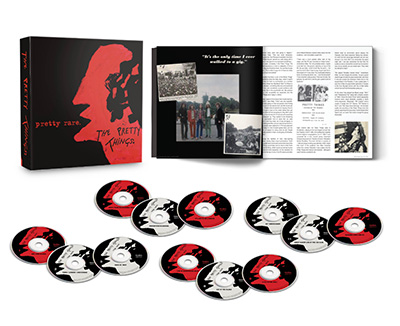
This enormous Madfish vinyl collection, The Complete Studio Albums: 1965–2020, tells that entire story across 13 LPs and two additional 10-inch records.
It is limited to just 1,000 copies worldwide and is currently available through the Now Spinning Magazine Store for £175—a saving of £100 on its original £275 price at the time of writing.
More dangerous than the Rolling Stones?
The Pretty Things were formed in 1963 around vocalist Phil May and guitarist Dick Taylor. Taylor had previously played bass in an early incarnation of the Rolling Stones alongside Mick Jagger and Keith Richards, before returning to Sidcup Art College and forming a new band with Phil May.
The original line-up was completed by rhythm guitarist Brian Pendleton, bassist John Stax and drummer Viv Prince. They looked dangerous, sounded even more dangerous and produced a particularly wild form of blues and R&B.
People often describe them as being more Rolling Stones than the Rolling Stones, and when you look at those early photographs and listen to those first records, you can understand why. There is nothing polite about them.
Phil May was the focal point: a genuine rock ’n’ roll frontman with a distinctive, characterful voice. Dick Taylor supplied the cutting guitar work, while Viv Prince was one of rock’s original wild drummers—an unpredictable figure whose personality and playing helped establish the band’s reputation.
Their early singles included “Rosalyn”, “Don’t Bring Me Down” and “Honey I Need”. David Bowie later covered both “Rosalyn” and “Don’t Bring Me Down” on his 1973 album Pin Ups, which gives you some idea of the respect the Pretty Things commanded among other musicians. Although the band never achieved the sustained commercial breakthrough enjoyed by many of their contemporaries, their influence reached far beyond their record sales.
A complete history on vinyl
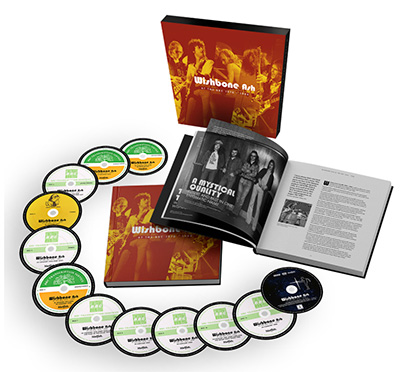
The Madfish box is housed in a substantial, rigid slipcase similar to the label’s large vinyl collections devoted to Caravan, Gentle Giant, Wishbone Ash and Ian Anderson.
It really is a massive box. It weighs a ton, but it feels suitably substantial for a collection covering 55 years of music.
The set contains:
- The Pretty Things (1965)
- Get the Picture? (1965)
- Emotions (1967)
- S. F. Sorrow (1968)
- Parachute (1970)
- Freeway Madness (1972)
- Silk Torpedo (1974)
- Savage Eye (1976)
- Cross Talk (1980)
- …Rage Before Beauty (1999)
- Balboa Island (2007)
- The Sweet Pretty Things (Are in Bed Now, of Course…) (2015)
- Bare as Bone, Bright as Blood (2020)
The longer CD-era albums, …Rage Before Beauty and Balboa Island, are each accompanied by a four-track 10-inch record playing at 33⅓ RPM. This allows the additional material to be included without turning the original albums into double-LP sets.
All 13 studio albums have been remastered specifically for vinyl. Each one also includes an album-sized insert containing archive photographs, reproductions of contemporary sleeves and informative notes from Mike Stax, Dick Taylor or Mark St. John.
There is also an exclusive pull-out photographic print carrying the full production and reissue credits.
From raw R&B to British psychedelia
The first two albums, both released in 1965, capture the Pretty Things at their most direct. This is raw British R&B played by musicians who sound as though they might come crashing out of the speakers.
The original group had attitude, energy and danger. Phil May’s voice, Dick Taylor’s guitar and the rhythm section’s sheer momentum created something that still feels gloriously untamed.
By 1967’s Emotions, however, the musical landscape was changing. The band began moving away from straightforward R&B and towards a more adventurous, psychedelic sound.
That evolution reached its peak with S. F. Sorrow in 1968. This is the album most frequently held up as the Pretty Things’ masterpiece. Built around the life of its central character, Sebastian F. Sorrow, it is widely regarded as one of the earliest complete rock operas and appeared before The Who released Tommy.
Whether S. F. Sorrow directly influenced Pete Townshend remains a matter of debate, but what cannot be disputed is how ambitious the Pretty Things had become. They were no longer simply an R&B band. They were using the studio, storytelling and psychedelic textures to explore what a rock album could be.
Parachute, released in 1970, continued that creative run. By this stage Skip Alan had become an important part of the band’s rhythmic identity, while multi-instrumentalists Wally Waller and Jon Povey brought additional vocals, keyboards, bass and guitar into the music. Pete Tolson would also become a central guitarist during the group’s 1970s period.
This was a band that could change personnel and musical direction while still retaining its essential character.
The Swan Song years
My own original entry point into the Pretty Things was Silk Torpedo.
Released in 1974, it was the first album issued in the UK by Led Zeppelin’s Swan Song label. That connection immediately made the Pretty Things visible to young rock fans like me who were following Led Zeppelin and the other artists associated with Peter Grant.
By now, the photographs show the band looking like archetypal mid-1970s rock stars. Everything appears to have been turned up to eleven: the clothes, the image and the excess.
Musically, Silk Torpedo is a superb album. It has always been one of my favourites in the catalogue, although listening through this complete collection has brought other records much closer to it. “Sad Eye”, in particular, is absolutely gorgeous.
Savage Eye followed in 1976. It is another strong rock album and one that seemed to be everywhere when I was buying records during the 1970s. Looking back, it feels as though this should have been the period when the Pretty Things finally made the leap into the top division.
For whatever reason, it never quite happened.
That is one of the great mysteries surrounding this band. They had the songs, the musicians, the image, the credibility and the support of a major rock label, but the enormous breakthrough always remained just out of reach.
Moving with the times
When the band returned with Cross Talk in 1980, they did not attempt to recreate 1965 or 1968. They absorbed some of the urgency and sharper edges of punk and new wave while continuing to sound like the Pretty Things.
Even the photographs tell that story. As you work through the box, you can see the musicians and fashions changing as the decades pass. The hairstyles, clothing and presentation evolve, but the commitment to rock ’n’ roll remains.
The later albums have actually become some of the records I play most frequently.
…Rage Before Beauty has a raw sound that reminds me at times of Dr. Feelgood, Frank Black and the Catholics. It is direct, unpolished rock ’n’ roll with no unnecessary decoration.
Balboa Island continues that journey back towards the band’s roots. There is R&B, blues and garage rock running through it, played with the experience of musicians who had lived this music rather than simply studied it.
These later records deserve far more attention. They are not merely additions made to extend the catalogue; they are a vital part of the Pretty Things story.
A moving final chapter
The journey ends with Bare as Bone, Bright as Blood, released in 2020 following Phil May’s death.
This first all-acoustic Pretty Things studio album strips the music back to the blues and roots influences that had been present from the beginning. It is intimate, weathered and incredibly moving.
Phil May’s voice carries the experiences of an entire lifetime. Alongside Dick Taylor’s acoustic and slide guitar, it brings the story full circle. After all the psychedelia, studio experimentation and 1970s rock excess, the Pretty Things returned to something elemental.
Knowing that this became their final studio statement gives the album enormous emotional weight.
Phil May died in May 2020, aged 75, following complications after hip surgery necessitated by a cycling accident. His final album was released later that year. It provides a remarkably dignified conclusion to a recording career that had begun 55 years earlier.
Packaging and presentation
The records themselves are beautifully pressed, and the remastering sounds excellent to me. This is a collection designed to be played rather than simply admired on a shelf.
There are, however, two areas where the presentation could have gone further.
Albums that may originally have appeared in gatefold sleeves are presented here as single sleeves. I would have liked completely faithful recreations of the original packaging, particularly in a premium set of this size.
The records also come in standard paper inner sleeves rather than poly-lined ones. Regular viewers will know how I feel about that! I will be replacing those with poly-lined sleeves myself.
The individual inserts compensate to some extent because they are full of excellent archive photographs and background information. Seeing the musicians and the wider world of rock music changing across more than five decades is one of the great pleasures of exploring this collection.
The verdict
This set will not be for everybody. Even at its reduced price, £175 is still a considerable amount of money.
However, you are receiving the complete Pretty Things studio journey on vinyl: 13 remastered albums, two additional 10-inch records, individual illustrated inserts and an exclusive print, all housed in an extremely sturdy presentation box.
More importantly, you are getting a substantial part of the history of British rock music.
The Pretty Things moved from raw rhythm and blues into psychedelia, progressive ideas, 1970s rock, new wave and finally back to acoustic blues. They changed with the times without ever losing the feeling that everything was being played honestly and from the heart.
They may never have achieved the worldwide commercial success their music deserved, but perhaps that is also why they retained such credibility. They always sound like a real band—unpredictable, occasionally chaotic and completely committed to rock ’n’ roll.
This is a beautifully produced collection devoted to one of Britain’s most important and consistently overlooked bands.
Phil Aston | Now Spinning Magazine