
I deliberately lived with this album before reviewing it, allowing the music to accompany Sue and me on our travels around Cornwall. Surrounded by the sea, cliffs and ever-changing weather, I began to feel increasingly connected to its atmosphere.
This is not simply an album featuring two celebrated progressive rock guitarists exchanging solos. It is a cinematic, emotional journey in which the guitars appear to speak to one another.
When I recently interviewed Steve Hackett for Now Spinning Magazine, he described it perfectly:
“It’s not the kind of album that guitarists normally make together.”
As Steve explained, albums involving two guitarists can sometimes become a competition, with each player attempting to “outplay each other and show their chops.” That is not what happens here. Instead, Hackett and Rothery listen, respond and leave space for each other.
The result is, in Steve’s words, “more cinematic, almost ambient at times.”
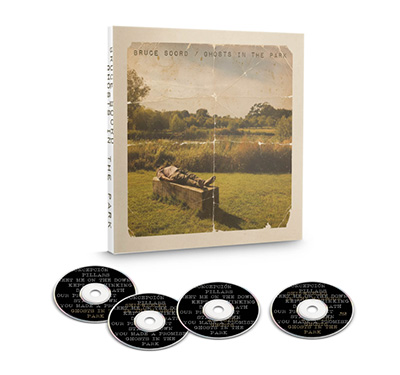
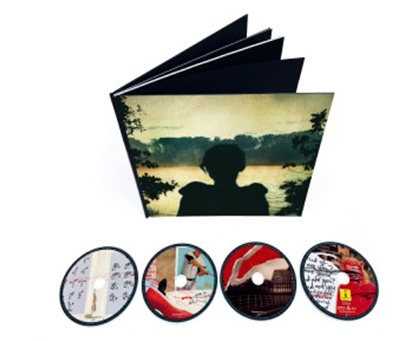
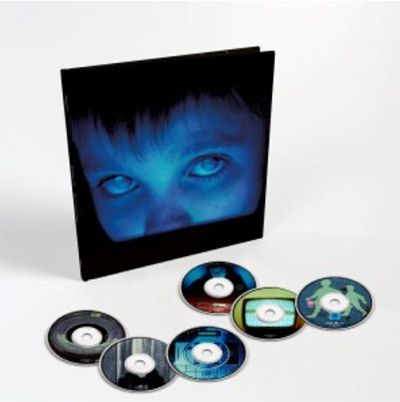
The CD and Blu-ray Mediabook
I chose the CD and Blu-ray mediabook rather than the vinyl edition, principally because I am becoming increasingly drawn towards surround sound and Dolby Atmos.
My own system is 5.1 rather than 7.1 or 11.1, but I still love the immersive experience this format can provide. Music such as this seems ideally suited to surround sound because atmosphere and space are so important to its impact.
The mediabook is beautifully presented, with evocative images connected to the individual pieces. There are photographs of Hackett and Rothery recording together at home, as well as atmospheric shots taken around Whitby, including the famous abbey overlooking the town.
It is a visual presentation that complements the character of the music extremely well.
The Storm
The album opens with The Storm, and living in Cornwall, where storms are very much part of the landscape, this immediately resonated with me.
It begins with the ambient sound of the sea before an almost sinister synthesiser appears. A solitary guitar emerges, followed by dramatic percussion and a rhythmic force that feels like waves crashing against the rocks.
Although the album has been described as ambient, this opening piece is also dark, powerful and extremely dramatic. Heavy chords build beneath guitar lines that seem to break through the storm clouds. Each note is clear and beautifully sustained, but also emotionally charged.
There are faster passages too. As Steve Hackett joked during our interview:
“There’s not a lot of shredding going on!”
That is true, but there are moments when both guitarists demonstrate considerable fire. Crucially, those moments always serve the music.
I also hear something slightly Eastern within the piece, together with flashes that remind me of Ritchie Blackmore’s Stargazer and Ronnie Montrose’s instrumental work from the 1980s. That is intended entirely as a compliment: the notes appear to breathe before the music retreats like an outgoing tide.
Sandsend
Sandsend seems almost to emerge from the closing moments of The Storm. The two guitars sing together over a beautifully relaxed groove, with subtle synthesiser touches adding to the atmosphere.
The guitar takes the listener by the hand and leads them into a story that requires no words. You can easily imagine walking along the coast while listening to it.
On headphones, the two guitars reminded me of seabirds floating above the shoreline and calling to each other. That might sound poetic, but it is genuinely what the music placed in my mind. Hackett and Rothery never compete for attention; they communicate.
Steve described the guitars as:
“Intertwining and dancing off each other.”
That sense of musical conversation runs through the entire album.
Red Dragon
Red Dragon begins with pipes played by Catherine Tickell, immediately giving the music a strong Celtic character. As someone living in a Celtic nation, this was always going to connect with me.
Confident power chords and soaring guitar lines gradually expand the soundscape. There is another hint of an Eastern atmosphere, but nothing overpowers the central mood. The musicians are creating a place for the listener to enter rather than merely demonstrating what they can play.
Both Steves use the tremolo arm to stretch and shape the notes, creating a floating, sustained sound. Once again, I was reminded of Ronnie Montrose, while there are also touches of Steve Hillage in the way the guitars seem to hover over the music.
The melodies contain a real earworm, and the return of the pipes at the end brings the piece full circle.
The Roaring Waves
The seven-minute title track is one of the album’s highlights.
It begins with beautifully played classical Spanish guitar from Steve Hackett. Keyboards and synthesiser textures gradually gather beneath it before the heavier, sustained electric guitar arrives.
There are moments that recall the soaring emotional quality of David Gilmour, but the interaction between Hackett and Rothery is entirely their own. It feels like a conversation between old friends conducted through the guitar.
There is a wonderful chord progression at the centre of the track. As a guitarist, you can recognise those moments when a sequence suddenly opens up and gives you the freedom to explore. That is exactly what appears to happen here. Neither musician seems restricted to a predetermined number of bars. They simply settle into the piece and allow the conversation to develop.
Steve Hackett told me that the recording process was:
“A bit old school… mates getting together in the garage and playing and hanging out.”
He also explained:
“We jammed together rather than have fixed ideas.”
That spontaneous quality can be heard throughout the title track. The guitars take turns, respond to each other and then gently return to the classical guitar heard at the beginning.
It is absolutely stunning.
K129
Before speaking to Steve, I initially thought the opening of K129 suggested a train. The piece is actually inspired by the dark story of a submarine that sank with the loss of everyone aboard.
The music begins with harmonics and guitars floating over a hypnotic, almost Tangerine Dream-like backdrop. This is one of the album’s more ambient and overtly cinematic compositions.
The echo and decay on the guitars allow each note to hang in the air. At one point, the entire piece seems to hover in space, as though it could continue indefinitely.
Then the music explodes.
The guitars become more intense, the drums build and the tension created during those quieter passages is released. It is a superb example of the album’s dynamic range.
The Black Sea
The Black Sea contains suspended guitar notes, atmospheric sound effects, a strong bass line and a wonderfully immersive groove.
This is particularly effective through headphones. You can simply allow yourself to float away within the sound.
As the piece develops, the guitars demonstrate just how intuitive the relationship between Hackett and Rothery has become. There is an almost telepathic quality to the way they react to one another.
Steve spoke of the “great sensitivity and mutual respect” involved in the collaboration, and that is exactly what I hear here. The piece contains numerous twists and turns, but never loses its central atmosphere.
I hope they make another album together. Their existing commitments may make live performances difficult, but this partnership feels as though it still has many more stories to tell.
Pacific Coast Highway
The closing track, Pacific Coast Highway, takes the album somewhere completely different.
At seven and a half minutes, it is an exhilarating road trip powered by Steve Hackett’s harmonica. Distant voices, slide guitar and a driving rhythm create the feeling of movement almost immediately.
This is the heaviest and most overtly rock ’n’ roll piece on the album. There are touches of ZZ Top, an excellent Hammond organ solo and some wonderfully aggressive tremolo-arm guitar.
After the atmospheric and sometimes dark character of the preceding tracks, Pacific Coast Highway feels joyous and liberating. The intertwining guitar solos are tremendous, but the arrangement remains unpredictable, dropping back into acoustic passages before accelerating again.
Female voices appear in the distance towards the end, and the album eventually closes with flute. It is an unexpected but completely satisfying conclusion.
An Album Built on Friendship and Trust
The Roaring Waves took many years to reach completion, but that long gestation may have contributed to its depth. This does not sound hurried or designed to satisfy commercial expectations. It sounds like two musicians following the music wherever it wishes to go.
Instead of arriving with completely structured compositions, Hackett and Rothery allowed improvisation and friendship to shape the project. The pieces are less concerned with conventional verses and choruses and more interested in mood, movement and emotional storytelling.
That is the real beauty of this album. Neither guitarist needs to prove anything. There is no battle for supremacy and no sense of one musician trying to dominate the other. It is about listening, trust and musical conversation.
For me, The Roaring Waves has become connected to the Cornish landscape: storms approaching across the sea, waves breaking against the rocks and quieter moments when the water appears almost motionless.
It is atmospheric, cinematic, powerful and deeply emotional. I highly recommend it.
ORDER THE ROARING WAVES ON CD / BLURAY
ORDER THE ROARING WAVES ON VINYL
Music is the healer and the doctor.
Phil Aston | Now Spinning Magazine