


When The Wicker Man Meets Black Sabbath
I had never heard the band before. Looking at the artwork, with no photograph of the musicians to guide me, I imagined I might be heading into some fairly uncompromising metal territory. Even the song titles offered few clues at first glance.
Within minutes, I was hearing something that brought together the eerie atmosphere of The Wicker Man, the weight of early Black Sabbath and the storytelling of traditional folk music. By the following day, I had played the album five or six times. The next morning, I played it again.
Who are Crumbling Ghost?
Crumbling Ghost are a London-based band whose music brings traditional folk songs into contact with heavy guitars, psychedelic textures and the slow-moving weight associated with doom and stoner rock.
They may be new to me, but they have been making music for years. Their earlier releases include their self-titled debut, II and Five Songs. Four arrives a decade after Five Songs, which was released in 2016.
The band’s publicity documents appearances at Roadburn and shared stages with Hawkwind and Damo Suzuki, alongside interest from Stuart Maconie, Stewart Lee and Tom Ravenscroft. There is already a history here, even if some of us are only now finding our way to their music.
The line-up on Four is Katie Harnett on vocals, John Mosley and Donny Hopkins on guitars, Ruth O’Loughlin on bass and Matthew Atkins on drums. Released on 7 August 2026 through New Heavy Sounds, the record contains seven tracks and was produced by Wayne Adams.
What interests me most is the way their music allows the old songs to retain their character while giving them a completely different physical presence.
“Bows Of London”: the moment everything changes
The opening track, “Bows Of London”, begins with gentle, ethereal acoustic textures. There is something melancholy and slightly menacing about it, even before the heavier instruments arrive.
Then Katie Harnett starts singing.
My immediate thought was The Wicker Man. I love that film and its soundtrack, and this opening has a similar sense of beauty with something unsettling lurking underneath. It evokes that early-1970s folk atmosphere, where an apparently simple melody can lead you somewhere very dark.
Then, out of nowhere, comes this enormous Sabbath-like guitar chord.
It hangs in the air. You can almost feel its weight coming out of the speakers.
What makes it so effective is that the vocal carries on in its own way. Katie does not suddenly change her delivery to match the volume of the guitars. The song continues to unfold while these great slabs of sound arrive around it.
Another chord follows. Then another. The drums and bass enter, and the music develops this slow, hypnotic stomp.
That was the moment I stopped thinking about what I had expected the album to sound like.
The Martin Carthy connection
Reading the sleeve notes helped everything fall into place.
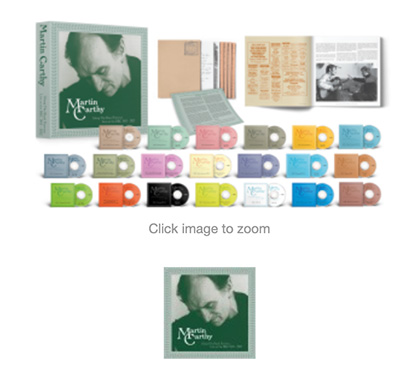
“Bows Of London” draws on Martin Carthy’s adaptation of “The Two Sisters”, recorded on Life and Limb. I had recently reviewed Carthy’s large Madfish box set, so I had been spending plenty of time immersed in his music. Discovering that connection here made this album even more fascinating.
“Bill Norrie” provides another link. The sleeve notes describe the inspiration of hearing Carthy perform the song at the Cumberland Arms in Byker, Newcastle, and wanting to bring it into the band.
There is real affection for the source material in these arrangements. The melodies and stories remain important, even when the guitars become huge.
Traditional folk songs can contain extraordinarily dark subject matter. Hearing that darkness given this much musical weight makes perfect sense once you experience it.
Old songs with a different kind of power
The track list also includes “Valtz Efter Tor Lohne”, “Lovely Joan”, “Gower Wassail” and “The Unquiet Grave”, alongside the band’s own composition, “Last Of All Sleep”.
In the sleeve notes, the Norwegian tune “Valtz Efter Tor Lohne” is linked to Chris Wood and Andy Cutting’s recordings, while “Lovely Joan” carries a reference to Ralph Vaughan Williams’ collecting work in 1908.
Those details are worth reading. They reveal the routes by which these songs reached Crumbling Ghost and give the listener another way into the record.
For my ears, this goes well beyond what I would normally expect from folk rock. Fairport Convention and Steeleye Span might be familiar reference points for the traditional material, but they would not have prepared me for the heaviness and atmosphere of Four.
Here, the songs inhabit a world of drones, distortion, hanging chords and passages of unexpected delicacy. It is a combination that kept drawing me back.
Opeth, Sabbath and a few unexpected echoes
Trying to describe a band like this can lead you towards several different comparisons.
The quieter passages sometimes remind me of Opeth’s Damnation, an album I often recommend to people who are unsure where to begin with Opeth. Four is heavier, but there is a related sense of melancholy and space when the music becomes more restrained.
Early Black Sabbath is an obvious reference for the weight and movement of some of the riffs. Elsewhere, I hear touches that bring Alice in Chains to mind.
There are moments of guitar interplay that suggest a softer Wishbone Ash feel, and something in the repetition and texture made me think of Placebo’s “Pure Morning”. The band might wonder how I arrived at that one, but it is part of my reaction to what I am hearing.
Lunatic Soul also came to mind: that feeling of being drawn into a remote woodland setting, with something ancient and mysterious happening just beyond your view.
These are listening reference points. Crumbling Ghost hold all these impressions together in a sound with its own identity.
Katie Harnett’s voice holds it together
Katie Harnett is central to why this album works so well for me.
Her voice has the clarity and presence to carry the songs through both the gentle passages and the heavier sections. She allows the stories to come through without having to compete with every guitar chord.
That contrast is particularly striking on “Bows Of London”. There is something wonderfully unsettling about hearing the vocal remain steady while the music around it gains so much weight.
It gives the album a character I found immediately compelling.
Production that lets you hear the musicians
The production is another major strength.
The drum sound is stunning. The snare has a real, authentic presence, and the bass is beautifully defined. There is space between the instruments, even when the music becomes dense.
It feels as though you are in the room with the band. I am describing the listening experience here: the recording gives me that sense of musicians playing together, with the detail and separation to hear what each person contributes.
I also love the feedback at the end of the second track. It is the sort of detail someone might be tempted to tidy away, yet to me it is exactly right.
Rock music has loose, fraying edges. Hands against strings, little squeaks, a tail of distortion: these things are part of its life.
That ending is one of the details that makes Four feel so human.
The vinyl edition
The copy I reviewed has a smoky clear and crimson appearance, and it looks lovely. The official listing describes the edition as red and white marbled vinyl, with the warning that the actual colour and effect can vary.
There is a printed lyric inner, plus a separate protective sleeve for the record. That is something I always appreciate. It lets the printed inner do its job while giving the vinyl proper protection.
My one suggestion concerns the absence of a band photograph in the packaging. I would have enjoyed seeing the people behind this music somewhere on the sleeve or inner. There is mystery in the artwork, but a photograph would have helped me connect with the musicians as a newcomer.
The notes themselves are well worth your time, particularly for the information about the songs and their sources.
My verdict
I hear a lot of music every week. Much of it is very good, but certain records make me want to return almost immediately and work out exactly what has caught my attention.
Four is one of those albums.
The traditional material, Katie Harnett’s voice, the heavy guitars and the superb production create something haunting and hypnotic. There is beauty here, but there is also menace and a tremendous sense of weight.
If you are curious, begin with “Bows Of London”. Give it your attention and listen to what happens when that first great guitar chord arrives.
Crumbling Ghost were completely new to me. Now I want more people to hear them.
Four is out now on New Heavy Sounds, on vinyl, CD and digitally.
Keep spinning those discs.
Track listing
- Bows Of London
- Bill Norrie
- Valtz Efter Tor Lohne
- Lovely Joan
- Gower Wassail
- Last Of All Sleep
- The Unquiet Grave
Phil Aston | Now Spinning Magazine








Echoes of Steeleye Span – similar vocal sound to Maddy Prior