
One of the great joys of running Now Spinning Magazine is being able to talk not only to the artists who made the music we love, but also to the people behind the scenes who help preserve it, curate it, and present it back to us in a way that feels genuinely special.
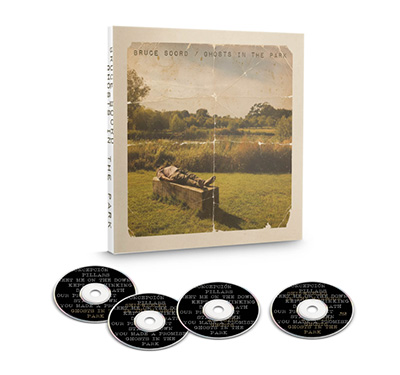
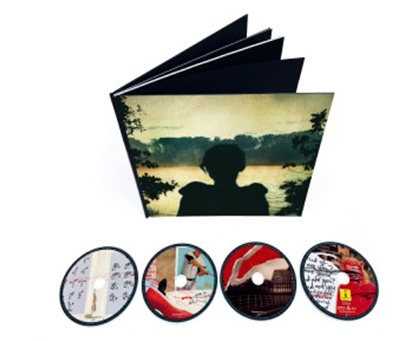
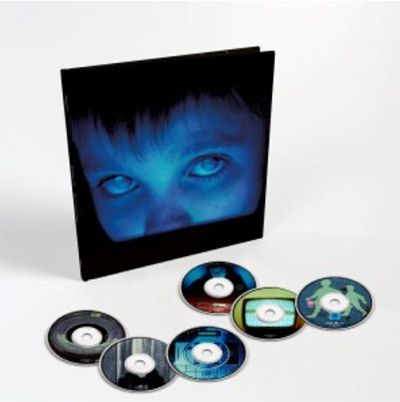
In this episode of the Now Spinning Magazine Podcast, I was joined by Ian Crockett, consultant for Madfish Records, Snapper Music and a number of other labels. For many collectors, Madfish has become something of a benchmark label when it comes to deluxe box sets. These are not just albums in a box. They are immersive, carefully researched, beautifully designed journeys into the history of a band.
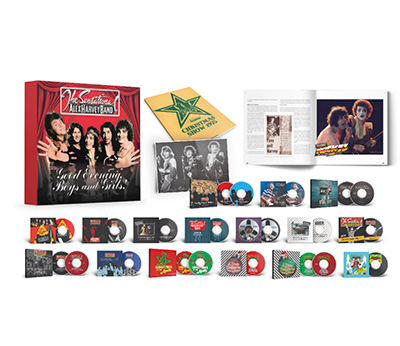
As I said to Ian during our conversation, opening a Madfish box set often feels like going away for the weekend with your favourite band. You lift the lid and suddenly you are surrounded by signed prints, replica posters, press cuttings, rare photographs, memorabilia, unreleased concerts, BBC sessions, interviews, essays and beautifully produced books. It is a complete world.
We began by talking about the new Sensational Alex Harvey Band box set, which Ian described as a project especially close to his heart. Like many of the best archival releases, this was not something that appeared overnight. It took years of research, licensing, tape searching, restoration and collaboration with band members, families, photographers, journalists and collectors.
What came through so strongly was Ian’s passion for Alex Harvey and the band. This was not simply a commercial project. It was the work of someone who truly understood why Alex Harvey mattered. Ian talked about Alex as one of the greatest live performers to come out of Scotland, if not Britain, and about the importance of finally presenting the band as the extraordinary live force they really were.
One of the most fascinating parts of the conversation was hearing how some of the material was found. Ian spoke about going through boxes kept by the late Ted McKenna, filled with cuttings, backstage passes, photographs, handwritten lyrics, tapes, cassettes and all kinds of treasures. He also explained how Dave Batchelor, often described as a kind of sixth member of the band, turned out to have several soundboard recordings that became central to the project.
That is what makes these sets so exciting. They are built from detective work, fan knowledge and trust. Ian described the way tickets, posters, photographs and recordings from specific concerts gradually came together, allowing the box to become more than just a collection of discs. It became a historical document.
For me, one of the most important points about the Alex Harvey set is that it allows those of us who never saw the band live to finally experience something of what people have been talking about for decades. The banter, the theatre, the danger, the humour, the atmosphere — it is all there. Even the rougher recordings have a power because they capture something that could never be recreated in a studio.
We also talked about the origins of the Madfish box set format. Ian traced it back to the Family box set, which became a template for what followed: a large format presentation built around a substantial book, rare audio, signed elements and archive material that told the story chronologically and emotionally. From there came sets by Steve Hillage, Wishbone Ash, Gentle Giant, Al Stewart, Caravan, Horslips, John Mayall and many more.
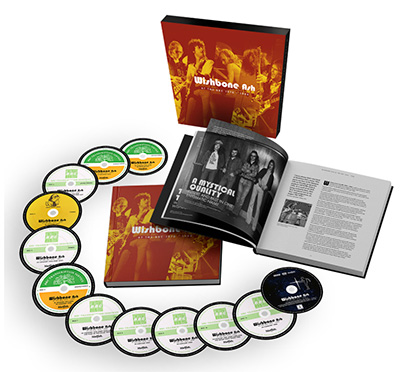
The Wishbone Ash Vintage Years box was my own entry point into this world. At the time, it was the most money I had ever spent on a box set, and I remember wondering whether it could possibly justify the price. But the moment I opened it, I understood. It was not just a product. It was an experience. It gave me the feeling of sitting with the band, going through their history, their music, their tours and their legacy.
Ian made a point that I think many collectors will recognise immediately: artists do not always know what fans want. A musician might look at a box set and wonder why anyone would want multiple live versions of the same song. But collectors know exactly why. We want to hear the differences. We want to compare performances. We want to understand the evolution of a song on stage.
That understanding of the fan psyche is what separates these sets from more routine catalogue reissues. Madfish boxes are made by people who know what it is like to be a collector. They understand the excitement of a signed print, the importance of a replica poster, the thrill of an unreleased live tape, and the emotional pull of holding something that feels definitive.
We also discussed the role of CD in the box set world. While industry headlines often focus almost entirely on vinyl, Ian and I both agreed that for these large career-spanning archival projects, the CD remains king. Vinyl is wonderful, and I love it, but when you are dealing with 20, 30, 40 or even 50 discs of material, CD is simply the most practical and satisfying format. It allows the music to breathe without making the box unaffordable, unmanageable or impossible to store.
Ian was very open about the challenges involved: rising production costs, licensing, pricing, manufacturing, artist involvement, and trying to balance value for money with the need for the project to work commercially. These sets take years, and not every idea makes it to the finish line. He even spoke about projects that nearly happened, including Captain Beefheart and Roy Harper, where the obstacles were not always financial but came down to permissions, interest or timing.
There were also some lovely human moments. Ian spoke about Steve Hillage carefully signing every print properly because he knew fans were paying good money. He talked about Roger Chapman signing certificates while the cats climbed over them. He even revealed that his dog Angus gets a credit in the Alex Harvey box set, alongside Dave Batchelor’s dog Finley.
That, to me, sums up why these projects work. They are professional, deeply researched and beautifully produced, but they also have warmth. They have personality. They are made by people who care.
Towards the end of the interview, Ian hinted at more Alex Harvey releases to come, as well as a forthcoming Gentle Giant-related project. Naturally, there are things he could not reveal yet, but it is clear there is plenty more on the horizon.
For Now Spinning Magazine, this kind of conversation is exactly why I love doing what I do. We are a community built around physical music, whether that is vinyl, CDs, box sets, books or deluxe editions. We care about the music, but we also care about how it is presented, preserved and passed on.
Madfish box sets are not for casual listeners. They are for people who love these artists deeply. But if one of these bands is part of your life, then these sets can feel genuinely priceless. They are legacy pieces. They are time capsules. They are love letters to the music.
A huge thank you to Ian Crockett for joining me and for offering such a fascinating look behind the curtain. It was a privilege to talk to someone who understands not just the business of reissues, but the emotional connection collectors have with the music they love.
ALL MADSFISH TITLES ARE AVAILABLE FROM THE NOW SPINNING MAGAZINE STORE
Music is the healer and the doctor.
Keep spinning those discs.
Phil Aston
Now Spinning Magazine