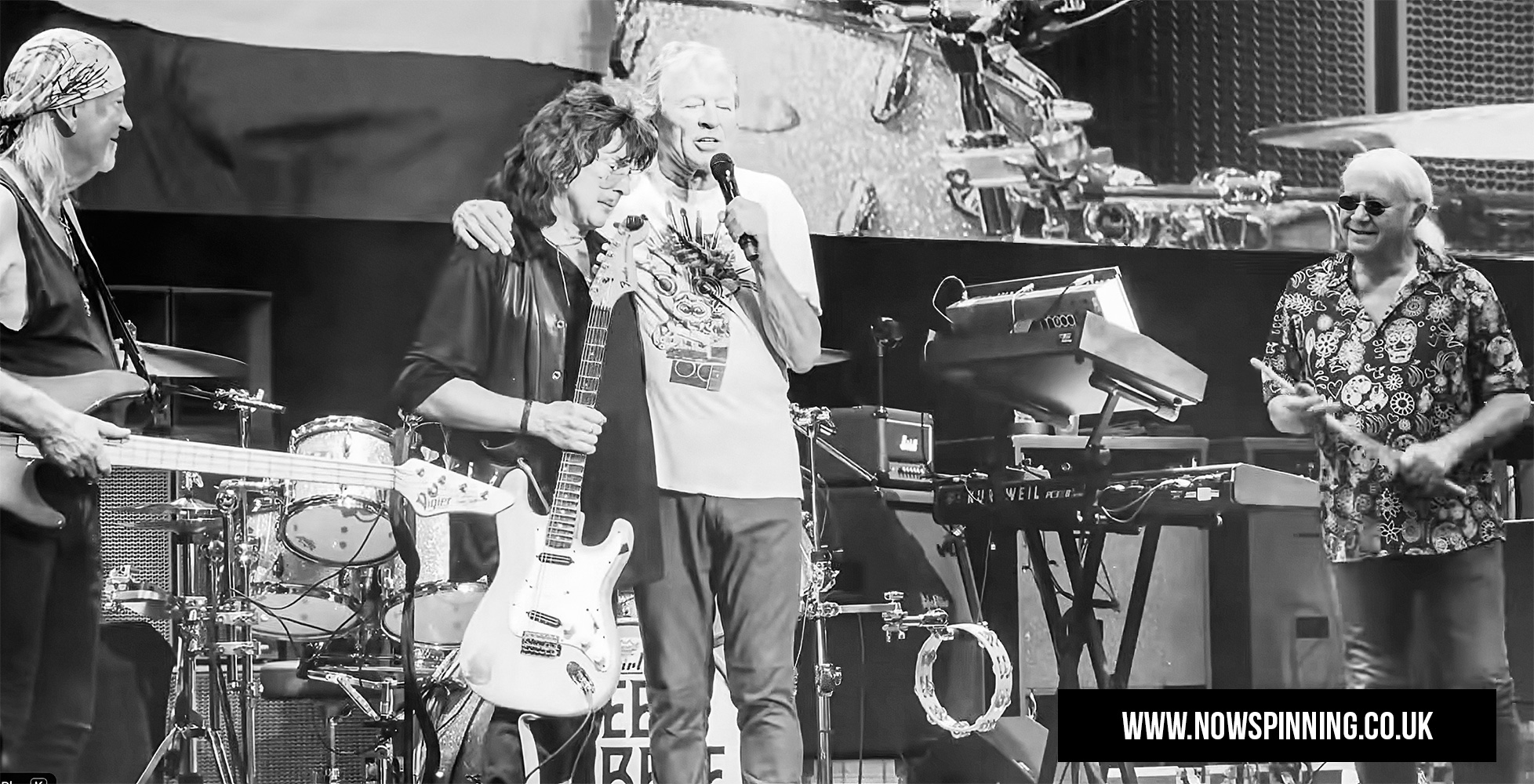
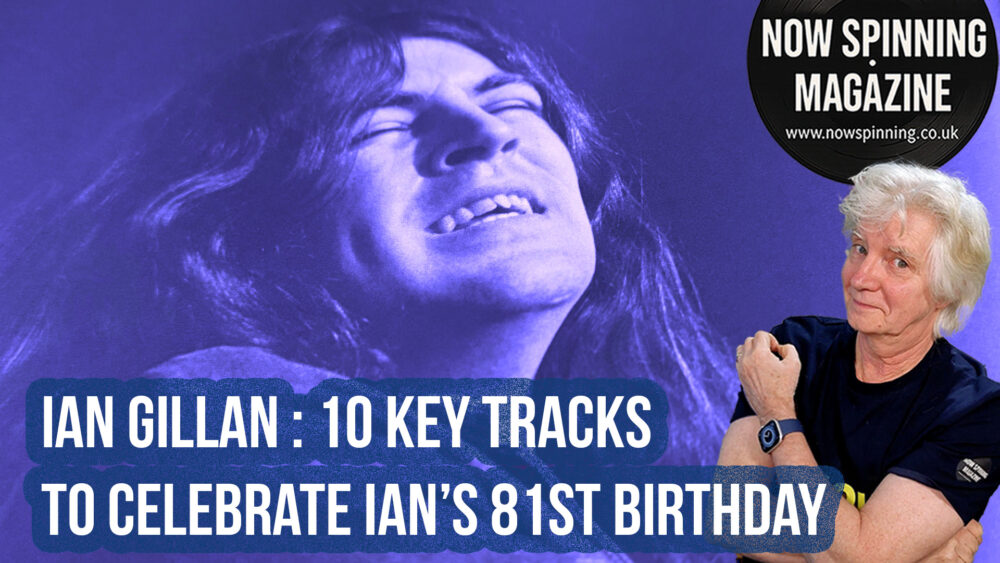

Ian Gillan is 81 years old and still out there singing with Deep Purple.
I remember seeing Deep Purple at Birmingham’s NEC around the time of the Bananas album. I met a group of fans who had travelled all the way from Australia, and one of them said that the band must surely be approaching the end. Ian Gillan was about to turn 60, after all.
At the time, that seemed perfectly logical. We simply didn’t know any rock singers in their sixties. The idea that Gillan might still be touring with Deep Purple more than two decades later would have appeared almost impossible.
Yet here we are. I am now in my sixties, Ian Gillan is 81, and that unmistakable voice remains part of a band that continues to record new music and perform around the world.
To celebrate his birthday, I decided to assemble another imaginary Ian Gillan compilation album: ten tracks divided across two sides of vinyl.
This isn’t necessarily a definitive “best of”. My selections change every time I do something like this. Certain songs float towards the centre while others move into a wider orbit, ready to return another day.
What this collection hopefully demonstrates is the remarkable range of Ian Gillan’s career. There is Deep Purple, the Ian Gillan Band, Gillan, his solo work and, of course, Jesus Christ Superstar.
So, let us lower the stylus and begin.
Side One
1. On the Rocks – Gillan
From Glory Road, 1980
My album begins with the magnificent “On the Rocks”.
At nearly seven minutes, it is an epic opening statement. It begins with strange sound effects and Colin Towns’ atmospheric keyboards before bursting into that tremendous central riff.
Everything that made the Gillan band so exciting is here. Bernie Tormé’s guitar seems constantly on the verge of losing control, while Towns brings structure and orchestral discipline. John McCoy’s distorted bass crashes through the track, with Mick Underwood holding everything together behind the drum kit.
Above it all is Ian Gillan, delivering socially aware lyrics with all the power and character that defined this period of his career.
The Gillan albums also offered tremendous value for money. Singles frequently featured non-album B-sides, while some editions of Glory Road included the bonus album For Gillan Fans Only.
“On the Rocks” is a wonderful example of why this chapter of Gillan’s career continues to mean so much to fans.
2. Gethsemane (I Only Want to Say)
From Jesus Christ Superstar, 1970
This performance demonstrates virtually everything Ian Gillan could do as a singer.
During “Gethsemane”, Jesus realises that he has been betrayed and confronts the fate awaiting him. Gillan moves from soft, vulnerable passages to rock singing and those astonishing, perfectly controlled high notes.
It is his entire vocal toolbox contained within one performance.
This material was also far removed from conventional four-in-the-bar rock. Gillan had to navigate complex phrasing and fit a huge number of words into melodic structures that could easily have overwhelmed a lesser singer.
Instead, he makes it sound natural, dramatic and deeply human.
If anyone ever asks what Ian Gillan could do beyond Deep Purple, play them “Gethsemane”.
Read our Review of The Jesus Super Star Box Set
3. Hallelujah – Deep Purple
Single, 1969
“Hallelujah” takes us back to one of Ian Gillan’s earliest recordings with Deep Purple.
Released in 1969 and backed with “April”, it is very much a product of its time: part pop, part psychedelia and quite different from the heavier direction that Deep Purple were about to pursue.
What makes it special is Gillan’s almost angelic vocal. We tend to associate him with power and screaming, but “Hallelujah” reveals the clarity, sweetness and control that were equally important parts of his voice.
It offers a fascinating glimpse of Gillan standing at the threshold of a new chapter—for himself, for Deep Purple and, ultimately, for rock music.
4. One Eye to Morocco – Ian Gillan
From One Eye to Morocco, 2009
Released in 2009, One Eye to Morocco showed Ian Gillan adapting his voice to a different musical setting.
The title track has a lighter, more relaxed vocal approach. It feels warm, melodic and joyful, demonstrating that Gillan did not always need to rely upon sheer power to make an impression.
I play this album a great deal. It contains some wonderful songs and highlights another side of Gillan as both a singer and songwriter.
More than 15 years after its release, he is still out there with Deep Purple—which rather undermines the suggestion made at the time that Gillan had reached the twilight of his career.
5. Fighting Man – Gillan
From The Japanese Album, 1978, and Mr. Universe, 1979
Side One closes with a song that will probably appear every time I compile a list like this.
“Fighting Man” was originally recorded for The Japanese Album and was considered so powerful that the same recording was subsequently used to close Mr. Universe.
Written by Colin Towns, it helped convince Ian Gillan that the more jazz-rock-oriented Ian Gillan Band was no longer the direction he wanted to follow.
It is a lengthy, melancholy and deeply atmospheric track. Steve Byrd delivers a superb guitar solo, but the centre of the song is Gillan’s vocal. There are moments of extraordinary power, yet they emerge from a much more reflective musical landscape.
“Fighting Man” is a performance I never tire of hearing. Even listeners unfamiliar with Gillan’s solo catalogue tend to ask, “Who is this?” when they encounter it.
For me, it is one of his essential recordings.
Looking Back at Mr Universe by Gillan
Side Two
1. Born to Kill – Gillan
From Double Trouble, 1981
When I first heard Double Trouble, I was not completely convinced by it. Bernie Tormé had left, Janick Gers had joined, and the studio material felt more melodic and noticeably different.
Over time, however, “Born to Kill” has gradually pushed its way into my list of favourite Ian Gillan performances.
At around nine-and-a-half minutes, it is exciting, varied and surprisingly progressive. It is another Gillan and Colin Towns composition—and that partnership produced many of the strongest songs from this period.
If you are beginning to explore the Gillan albums, following the Towns and Gillan songwriting credits is a very good place to start.
This is the first time “Born to Kill” has appeared on one of my birthday compilations, but I suspect it may remain here.
Looking back at Double Trouble by Gillan
2. Place in Line – Deep Purple
From Who Do We Think We Are, 1973
This is my wildcard selection.
The first time I heard “Place in Line”, I genuinely wondered who was singing. Gillan’s voice during the opening verses sounds unlike almost anything else in his recorded catalogue.
The song is rooted in blues and R&B, with something of the relaxed feel of “Lazy”. As the tempo and intensity increase, Gillan becomes more recognisable, but those opening passages remain unique.
That is why I have included it. This album is intended to demonstrate Ian Gillan’s range, and “Place in Line” captures a vocal character that he rarely used elsewhere.
Looking back at Who Do We Think We Are by Deep Purple
3. When a Blind Man Cries – Deep Purple
B-side of Never Before, 1972
It is difficult to explain to younger listeners just how easy it once was for a great song to disappear.
“When a Blind Man Cries” was placed on the B-side of “Never Before” and left off Machine Head. If you missed the single, you might not hear the song at all. It was not readily available on the compilations of the time, and I eventually found it on a German Mark I & II collection.
“Never Before” was actually the first Deep Purple song I ever heard. It was played during a New Year chart programme as a record that perhaps should have been a bigger hit.
Its B-side has since become one of Deep Purple’s most treasured songs.
Ritchie Blackmore’s beautiful guitar solo is rightly celebrated, but Gillan’s vocal is equally extraordinary. It is restrained, emotional and completely convincing. The lyrics have also acquired an added poignancy in light of Gillan’s later difficulties with his eyesight.
It remains one of his finest performances.
4. Sometimes I Feel Like Screaming – Deep Purple
From Purpendicular, 1996
If I had to select one song to represent the Steve Morse era of Deep Purple, it would be “Sometimes I Feel Like Screaming”.
I am a huge admirer of this period and would love the current band to revisit more of its music.
Purpendicular gave Deep Purple a new sense of freedom. The album moves through several musical styles, and you can hear a revitalised band exploring what it could become with Steve Morse.
“Sometimes I Feel Like Screaming” is uplifting, moving and beautifully constructed. Gillan delivers another wonderful lyric and vocal performance, supported by one of Morse’s most memorable guitar themes.
It is a modern Deep Purple classic.
5. Child in Time – Deep Purple
From Deep Purple in Rock, 1970
There could only be one final track.
“Child in Time” did not simply help define Deep Purple in Rock; it helped define Ian Gillan.
Other major rock bands had brilliant singers, but nobody else had an Ian Gillan—and nobody else had a song quite like this.
The performance is built upon tension and dynamics. Gillan begins quietly before gradually climbing towards those famous screams. On the Made in Japan version, it can feel as though he travels from zero to sixty in a couple of seconds. On the original studio recording, the tension builds more gradually, making the eventual release even more powerful.
The music rises into its bolero-like pattern before Ritchie Blackmore enters with a beautifully melodic solo and then heads directly towards the sun.
In 1970, this was the sort of track that could frighten your parents. More than half a century later, it might still frighten your children.
“Child in Time” remains one of rock’s defining performances and the perfect closing track for my imaginary Ian Gillan album.
Happy Birthday, Ian Gillan
That completes my ten-track vinyl celebration of Ian Gillan at 81.
It is not meant to be definitive. There is no Ian Gillan Band material this time, and many extraordinary Deep Purple and solo performances are missing. Ask me again next year and several of the selections may have changed.
That is the joy of creating an imaginary album like this. The songs we choose reflect where we are in our own lives and which pieces of music are currently pulling us back.
Ian Gillan’s voice has been part of the soundtrack to my life for more than five decades. It has been powerful, dramatic, tender, humorous, rebellious and completely individual.
Nobody else sounds like him.
What would you choose for your own ten-track Ian Gillan album? You have five tracks on each side of vinyl, covering any part of his career.
I would love to see your selections.
Phil Aston | Now Spinning Magazine