
Metal Monthly Ep2 : Darkthrone, Napalm Death, Rainbow, Randy Rhoads and More
Welcome to episode two of Metal Monthly on Now Spinning Magazine, with Phil Aston and co-host Wayne McAloon.
In this episode we dive into the huge Darkthrone vinyl box set, talk black metal old and new, discuss the new Melvins / Napalm Death collaboration, revisit the recent Rainbow box set, and look ahead to releases from Heaven & Hell, Exodus, Hellripper, Myrath and Winterfylleth.
We also reflect on the loss of Phil Campbell and remember the legacy of Randy Rhoads. If you love metal, hard rock, box sets, physical media and discovering new music, this is for you.
There’s something really satisfying about sitting down and talking metal with someone who genuinely lives and breathes it. Thats exactly what happened again in episode two of Metal Monthly, as I was joined by my co-host Wayne McAloon for another deep dive into the albums, box sets, new releases and conversations that keep heavy music alive.
What I’m enjoying about this series already is that it isn’t about pretending to know everything or trying to chase trends. It’s about two metal fans sharing what we’ve been listening to, what excites us, what confuses us, and why this music still matters. The response to episode one was brilliant, and it was especially encouraging to see how many people discovered something new from that first conversation. That, for me, is what this is all about. There is always new music out there. You just have to be willing to look beyond the same familiar names.
We opened this episode by briefly revisiting one of the albums mentioned last time — the new Worm record — which has clearly struck a chord with listeners. Wayne described it beautifully as something that sits on that border between gothic extremity and the spirit of 1990s dark metal. If your ears are tuned to bands like Cradle of Filth, Paradise Lost, Moonspell or My Dying Bride, then this is an album that deserves your attention. It was also another reminder that metal is still evolving, still spawning new bands with their own identity, even if the emotional pull of the music we grew up with never really leaves us.
From there, we turned sharply into darker territory with the enormous Darkthrone vinyl box set. And enormous really is the word. This thing is a monster. But beyond the physical size of it, what fascinated me was what it represents. Darkthrone may not be a household name in the way that Sabbath, Priest or Maiden are, but within black metal they are one of the defining bands. Wayne explained brilliantly how the set covers albums two to ten, deliberately leaving out the debut because that first album belonged more to death metal than black metal. What follows after that is, in many ways, the blueprint for Norwegian black metal as most people understand it.
Listening to Wayne talk through that history was one of my favourite parts of the episode. He made an important distinction between the so-called first wave of black metal — bands like Venom, Celtic Frost and Bathory — and the second wave, where the Norwegian scene really carved out its own identity. That’s where Darkthrone, Mayhem, Immortal, Satyricon, Emperor and others started shaping what many fans still think of as “true” black metal. For someone like me, still relatively new to some of the more extreme edges of the genre, those distinctions are fascinating. It’s easy from the outside to think it all sounds the same, but when you start to really listen, those subtleties are huge.
The Darkthrone box itself also led us into one of those collector conversations that I know a lot of Now Spinning readers will recognise. This is a beautifully made set, with strong pressings, quality card stock, restored artwork and a genuinely informative book. But it also has one of those frustrating details that seems to crop up so often now — the DVD is tucked away in a flimsy plastic sleeve, which makes it feel like an afterthought compared with the care taken over the vinyl. It’s a small gripe, but if you’re asking fans to invest in a premium physical edition, these things matter.
Staying within black metal, Wayne also highlighted Sorcier des Glaces? No — this time it was Forteresse? Actually, it was Hors Temps by a Quebec black metal band, another example of how the genre has spread and evolved beyond its Norwegian origins. What struck me most about this release was that, while it remains relentless and intense, it felt more accessible to me than the raw early Darkthrone material. Wayne made the point that modern black metal production is often much slicker, and that makes a real difference. Some of the early Norwegian albums were intentionally recorded to sound as harsh and abrasive as possible — almost as an act of defiance against the music industry itself. That rawness is part of their identity, but it can also be a barrier for new listeners. This newer album still has all the force and atmosphere, but it feels easier to get inside.
My own pick for the month was the collaboration between Melvins and Napalm Death, a project that on paper sounds like it should simply be an avalanche of sonic violence. And to be fair, it starts that way. But what surprised me was just how inventive and unpredictable it becomes. Yes, there is growling, there is sludge, there is aggression, but there is also a strange sense of musical humour, post-punk attitude, experimental texture and even moments that made Sue say, “That sounds like Siouxsie and the Banshees.” The more I listened, the more I understood what she meant.
That is what I found so enjoyable about it. It doesn’t stay in one lane. It shifts. It mutates. At times it feels like death metal with a funky undercurrent. At other times it drifts into territory that feels more like the Melvins stretching the form apart, with Napalm Death adding weight and attack rather than simply overwhelming everything. Even if you’re not a dedicated fan of either band, this is one of those records that feels genuinely worth hearing because it refuses to behave the way you expect it to.
We also returned briefly to the recent Rainbow box set, which I have already reviewed in depth. That discussion became less about the music itself — because Rising remains one of the most important hard rock and proto-metal albums ever made — and more about the culture surrounding reissues. Every time a set like this appears, the same questions follow. Why isn’t there a Blu-ray? Why isn’t Long Live Rock ’n’ Roll included? Why wasn’t this remixed? Why isn’t Ritchie Blackmore more involved? The truth is that this particular set covers a very specific period, 1975 to 1976, and it gathers together material that many people either don’t own or have never been able to find in one place. Not every release has to be for the hardcore collector who already has three versions of everything.
That was really one of the recurring themes of this episode. We as collectors sometimes forget that not everyone is living with shelves full of alternate mixes, obscure live discs and hard-to-find archive material. For many people, these sets are not “cash grabs” at all. They are gateways. They are ways into a catalogue. And because so much of this material is limited by nature, the decision to buy is usually simple: either you want it or you leave it. No one is being forced.
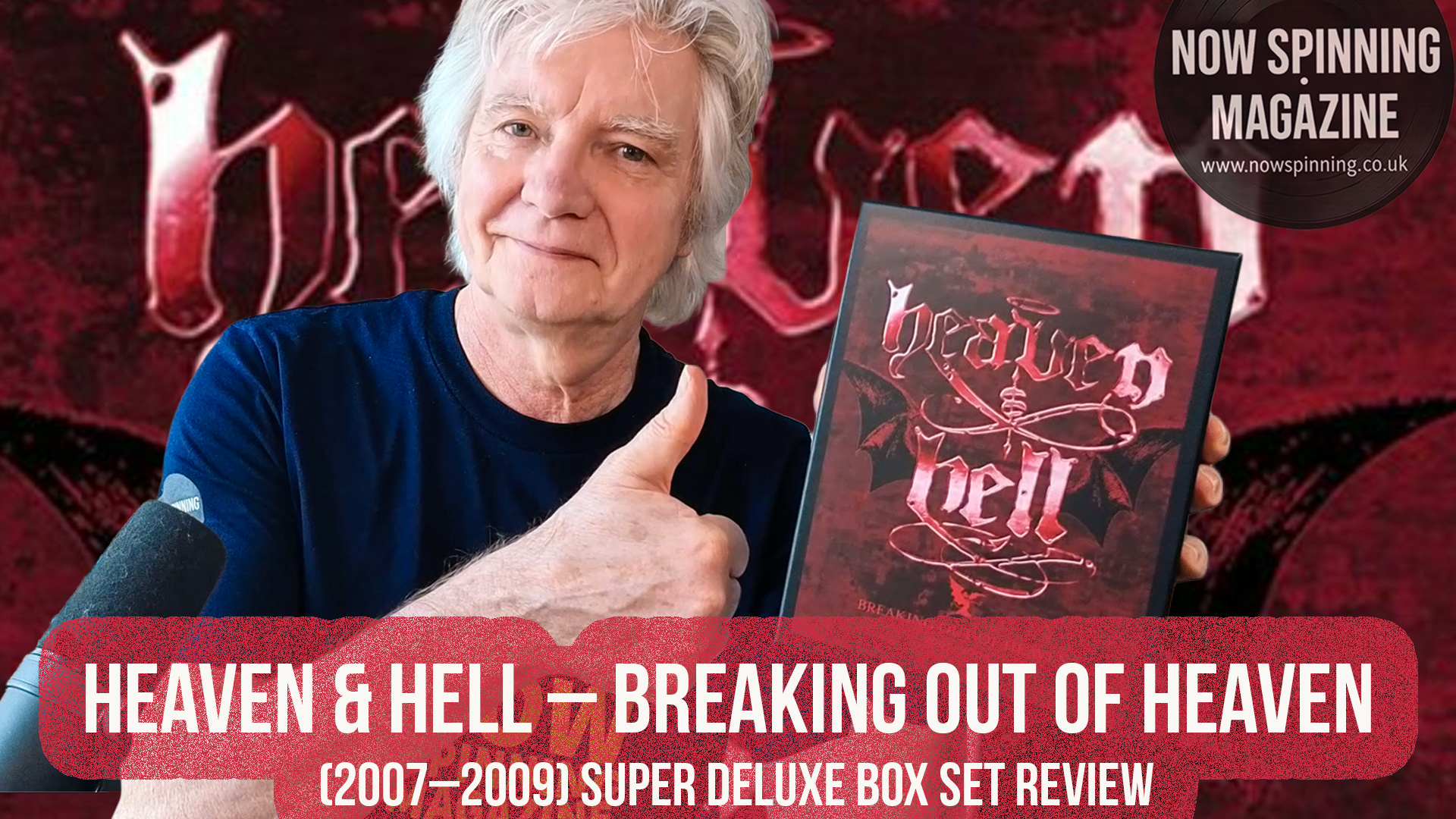
Looking ahead, there is plenty for metal fans to get excited about. We talked about the upcoming Heaven & Hell box set, which pulls together material from different releases and finally gives that Dio-fronted Sabbath-related era a more cohesive physical home. Again, there isn’t much genuinely unreleased content, but that almost misses the point. For fans who don’t already own the DVD, the Wacken footage, the various live releases and the scattered extras, it makes perfect sense.
We also touched on the new Exodus album, which looks like one of the big metal releases of the month, along with the forthcoming Hellripper record, the new Myrath album and another release from Winterfylleth. What I liked about this section of the conversation was the variety. That’s the thing people often miss about metal. It isn’t one sound. It isn’t even one attitude. Within the same discussion you can move from extreme Scottish speed-black metal to melodic progressive metal with Middle Eastern influences, then into British black metal, then thrash, then classic hard rock. It is such a broad church.
The Myrath conversation in particular reminded me how rewarding it is when a band genuinely brings their own cultural identity into the music. Their sound has always stood out because of that blend of progressive metal and Middle Eastern melody, but Wayne pointed out that one of the new singles leans into something even more African in feel, almost like Paul Simon’s Graceland filtered through a metal lens. That kind of description is exactly why I love talking to Wayne. He hears connections that are unexpected, but once he says them, they make perfect sense.
The episode closed on a more reflective note as we remembered Phil Campbell, whose passing came as a real shock. Sixty-four is no age at all. It really hit me, perhaps because it makes you think about time differently as you get older. I mentioned in the conversation that when my own dad died at fifty-six, I thought that was old. Now I know better. It isn’t old at all.
What I wanted to say about Phil Campbell is that his contribution to Motörhead can easily be underestimated if you only think in terms of flashy lead guitar heroes. In a power trio, there is nowhere to hide. If the lead guitar moves away from the core of the song, a hole opens up. But Phil had a way of playing that kept everything driving forward. His guitar work was part lead, part rhythm, part momentum, all attitude. It never felt like showing off for the sake of it. It served the songs, and in a band like Motörhead that matters more than anything. He was there for over three decades, the longest-serving guitarist in the band, and his role in shaping that sound should never be taken lightly.
And finally, we marked the anniversary of losing Randy Rhoads. Forty-four years. That’s one of those numbers that makes you stop for a second. We talked about the Tribute album and about the same thought that always comes into my mind when I think about Randy: what would he have gone on to do? He was already such a distinctive player, but because of his classical grounding and his curiosity, I can’t help feeling he would have moved far beyond simply being remembered as Ozzy’s guitarist. I think he would have become one of those rare musicians whose journey kept unfolding in unexpected ways — perhaps into instrumental music, progressive territory, or something even more ambitious. His star was always going to burn brightly.
Thats where episode two of Metal Monthly landed for me: discovery, debate, box sets, subgenres, future releases, and also the reminder that this music carries history with it. The past matters. The present matters too. And the future is still being written by bands making extraordinary noise in rehearsal rooms and studios all over the world.
That’s why this series matters to me. Metal is not frozen in time. It is alive.
Thank you for all your support