
There’s something deeply satisfying about discovering a band you somehow missed the first time around. For me, Nektar have become one of those rare “new old discoveries” — a band whose catalogue I’m not just exploring, but genuinely falling into. And with each release in this ongoing Esoteric reissue campaign, that connection deepens.
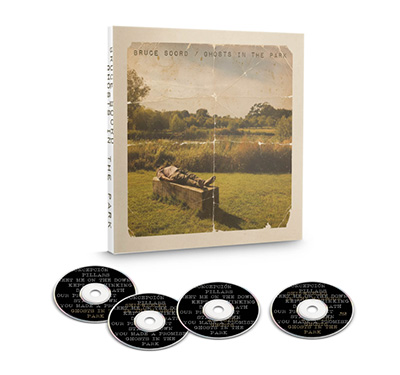
Down To Earth, originally released in 1974, arrives here as part of that series in a 4CD clamshell edition. While the packaging may not quite match the more elaborate earlier book-style releases, what matters most is the music — and in that respect, this set absolutely delivers. Inside, you’ll find the original album newly remastered, alongside a fascinating collection of bonus material including sessions from Chipping Norton Studios and a full live performance from St. Louis in 1975 spread across two discs. It’s a generous and thoughtfully curated package, one that reflects a band still very much involved in how their legacy is being presented.
What struck me most on revisiting Down To Earth is just how different it feels compared to the earlier Nektar albums I’d immersed myself in. If Remember The Future and Tab In The Ocean represent the band at their most expansive and conceptual, this album feels more grounded — more immediate, more song-driven. But crucially, that accessibility doesn’t come at the expense of identity. This is still unmistakably Nektar, still rooted in that rich blend of Hammond organ, melodic guitar work, and progressive ambition. It simply reveals another side of their personality.
That shift in approach may well explain why this album has sometimes been perceived as a lesser entry in their catalogue. I’ll admit, I had that impression myself before spending proper time with it. But hearing it in this context, with the benefit of hindsight and the expanded material, that assumption quickly falls away. In fact, Down To Earth now feels like one of their most engaging and perhaps even most approachable works — the kind of album that could easily serve as a gateway into their wider discography.
The opening track, Astral Man, sets the tone beautifully, drawing you in with confidence and clarity. And then there’s Nelly The Elephant — a title that might once have raised an eyebrow, but a track that has gone on to become one of the band’s most beloved live staples. Driven by that unmistakable Hammond sound and a powerful groove, it captures everything that makes 70s progressive rock so compelling when it’s done right — musicality, character, and just the right amount of daring.
There are also subtle yet important additions to the sound here, including the presence of P. P. Arnold, whose vocals bring a different texture to tracks like Early Morning Clown and Little Boy. These moments broaden the sonic palette and reinforce the sense that this is a band willing to experiment, to stretch beyond expectations without losing their core identity. Contributions from musicians associated with Hawkwind further enrich the album’s atmosphere, adding another layer to its already distinctive feel.
The bonus material is far more than an afterthought. The Chipping Norton sessions offer a fascinating glimpse into the band’s working process — looser, more spontaneous, and recorded in those late-night hours where creativity often flows most freely. Meanwhile, the St. Louis concert from 1975 is a revelation. Spread across two discs, it captures Nektar at full strength on stage, stretching out, exploring, and reminding you just how powerful they were as a live act. For anyone who values live recordings from this era, this is an essential inclusion.
What makes this release particularly special is how it reframes the album itself. What I once thought might be a “completionist purchase” has become something far more significant — the release that pushed me to revisit everything, to go back and listen again with fresh ears. And that’s perhaps the greatest compliment you can pay any reissue.
Down To Earth may not be the most famous album in Nektar’s catalogue, but it might just be one of the most important — not only in terms of their evolution as a band, but in how it connects with listeners today. It bridges the gap between complexity and accessibility, between ambition and immediacy. And in doing so, it opens the door for a whole new audience to step into their world.
So if you’ve been following this series, this is absolutely essential. And if you’re new to Nektar, this might just be the perfect place to begin.
Put the kettle on, sit down, and give it your full attention.
Because this one might just surprise you.