

Raw Heartbreak, Gated Reverb, and Spatial Depth: Steven Wilson and Phil Collins Reflect on Face Value
When Phil Collins sat down with musician, producer, and remix maestro Steven Wilson on the 30th September 2026 for a first-ever Dolby Atmos playback of Face Value, it marked a rare moment of deep reflection. Astonishingly, Collins admitted to the room that he had not listened to his 1981 debut solo album as a complete, unbroken piece of music in nearly forty-five years. Hearing Wilson’s meticulous spatial mix brought back the raw emotional gravity, the radical production choices, and the sheer sonic eclecticism of a record forged in the fires of personal crisis.
Before Collins became a global pop superstar, he was primarily known as Genesis’s virtuosic drummer. Face Value emerged during what Collins openly referred to as his “great sorrow”, a painful, life-altering divorce that left him alone in an empty house after an attempted reconciliation in Vancouver failed. Returning home with nothing to do while bandmates Tony Banks and Mike Rutherford worked on their respective solo projects, Collins set up a modest rig in his spare bedroom. Armed with a Prophet-5 synthesizer, a Fender Rhodes electric piano, an acoustic piano left to him by his aunt, a microphone, and a basic Roland drum machine, he began improvising as a form of emotional catharsis.
Crucially, many of those original home demo elements made it directly onto the finished master tapes. The foundational drum machine and synth patterns on iconic tracks like “In the Air Tonight” and “Hand in Hand” were recorded right there in his bedroom. When Steven Wilson asked why he chose not to re-record those parts in a commercial studio, Collins pointed to an earlier lesson learned while playing drums on Brian Eno’s solo albums. Working with Eno taught him that home-recorded tapes often possess an irreplaceable emotional spontaneity; attempting to recreate or “improve” them in a polished studio environment almost always robs the performance of its original magic. Collin’s also said it was emotionally impossible to rerecord the demos because of the heart break and pian he felt when he created them.
The conversation inevitably turned to the album’s defining sonic hallmark: the revolutionary drum sound on “In the Air Tonight”. Collins recounted how he and engineer Hugh Padgham first stumbled upon the heavily gated, violently compressed room tone while working on Peter Gabriel’s 1980 solo album. Encouraged by Gabriel’s strict rule banning all cymbals from the sessions, Padgham experimented with the SSL mixing console’s reverse-talkback listen microphone. As Collins played, the explosive sound in his headphones inspired him to alter his rhythm on the spot. (Gabriel went onto record “intruder” using the same sound.) That accidental discovery laid the groundwork for one of the most famous drum fills in music history.
When it came to releasing “In the Air Tonight” as the lead single, Collins credited Virgin Records with making a remarkably brave decision. In an era dominated by tight radio edits, choosing a song built around three minutes of dark, atmospheric slow-burn, followed by an explosive drum entry and an unusually prolonged auto-fade, defied every commercial rule. Wilson noted that because of how the track was engineered, the second half of the song is essentially one long, hypnotic fade-out that tricks the mind into feeling like the track is far longer than it actually is.
Beyond the big singles, Wilson and Collins explored the remarkable variety and experimental edge that set Face Value apart from standard 1980s pop records. The album moves seamlessly from the jazz-inflected Weather Report chords of “I’m Not Moving” to an ambitious, psychedelic cover of The Beatles’ “Tomorrow Never Knows”. Packed with reversed tape loops, multi-layered background vocals, and L. Shankar’s soaring Indian violin textures, Collins’ cover paid homage to the Fab Four while showcasing his own vocal versatility. He even shared a cherished memory from watching The Beatles’ Anthology series, where George Harrison listened back to the original multitrack tapes of “Tomorrow Never Knows” and noted that Phil Collins had captured everything on his own cover version.
The interview also illuminated Collins’ collaborative spirit and his desire to break away from progressive rock conventions. Seeking a sharp departure from the Genesis sound, Collins brought in Earth, Wind & Fire’s famous brass section, the Phoenix Horns, to inject tight R&B energy into tracks like “I Missed Again” and his upbeat reworking of “Behind the Lines”. He also recalled a memorable session with Eric Clapton, who was invited to play slide guitar on the heart-breaking ballad “If Leaving Me Is Easy”. Overwhelmed by the song’s fragile mood and not wanting to clutter the arrangement, Clapton ended up playing just a single, perfectly placed note. As Collins fondly remembered, Clapton remarked that he didn’t want to spoil the song, a gesture Collins praised as playing “the right note and the right mood”. Note, Collins still credited Clapton on the album, even though he played just one note.
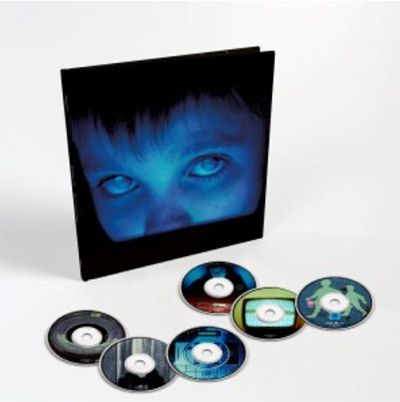
Even the album’s stark visual identity was designed to reflect its unfiltered emotional honesty. The famous cover artwork, featuring an extreme close-up of Collins’ face, was not born out of vanity, but rather a desire to let listeners “look inside someone’s head” and see the brain ticking. To maintain that intimate, unvarnished connection, Collins insisted on handwriting all the sleeve notes and lyrics, right down to the tiny legal copyright text encircling the centre label of the vinyl disc.
In approaching the album for Dolby Atmos, Steven Wilson explained that his primary objective was total historical fidelity. Rather than trying to modernise or alter the record, Wilson painstakingly matched the balances, reverbs, delays, and dynamic choices of the original stereo mix created by Collins and co-Producer at the time, Hugh Padgham. Only after establishing absolute accuracy did he begin distributing elements into the height and surround speakers to create a three-dimensional soundstage.
Hearing Face Value in Dolby Atmos underlines just how well the album’s dramatic contrasts, from delicate, ambient piano recorded with distant room mics to thunderous horn stabs and gated drums, translate into a spatial environment. Forty-five years after its release, Collins’ debut remains a masterclass in honest song writing and innovative production, proving that true emotional vulnerability and sonic courage never go out of style.
Timothy Hughes | Now Spinning Magazine